1. The Headline Question: Will AI Replace Dentists?
With large language models writing medical summaries and computer vision detecting skin lesions, dental patients and clinicians alike have asked: Is artificial intelligence poised to replace the dentist?
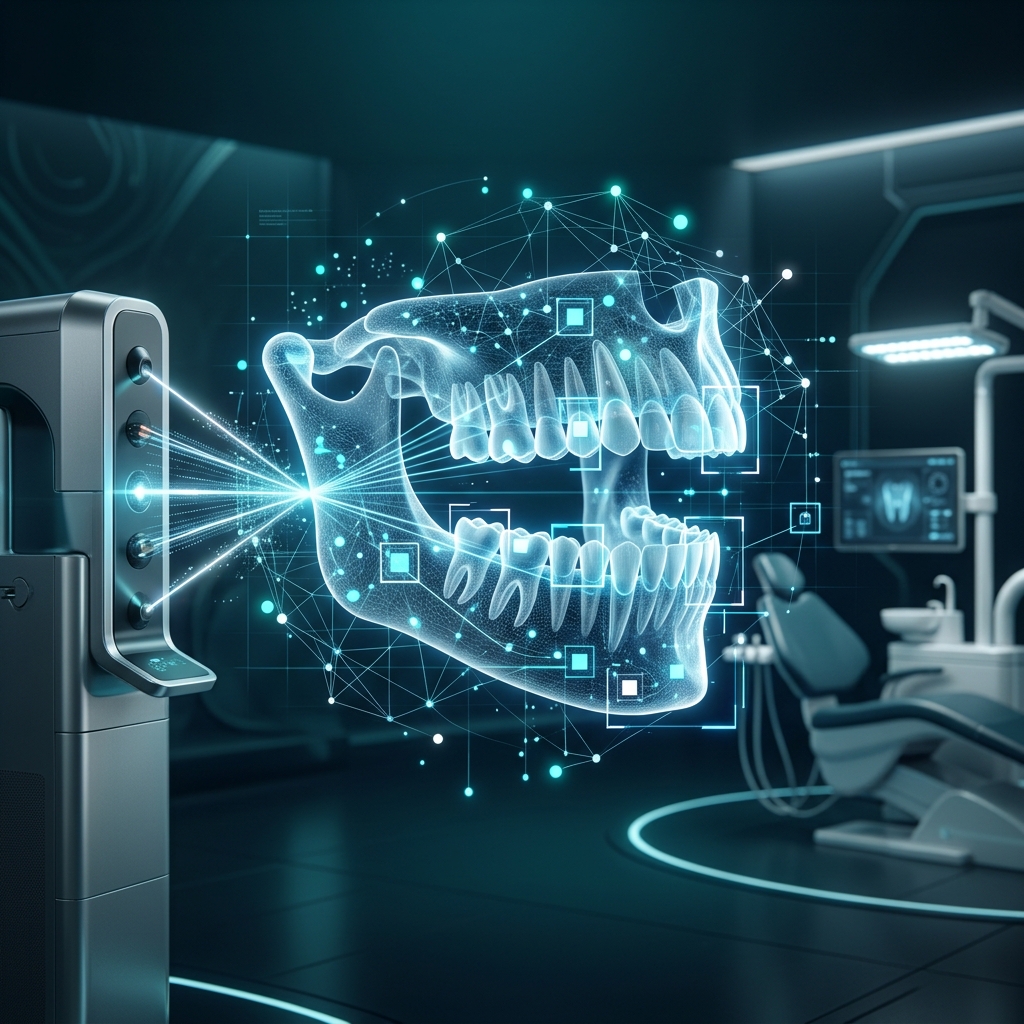
A landmark 2026 systematic review and meta-analysis published in Clinical and Experimental Dental Research investigated this exact question. By compiling data from 27 peer-reviewed studies encompassing 60,857 clinical dental radiographs (bitewings, periapicals, and panoramic orthopantomograms), researchers calculated how accurately modern deep neural networks detect dental caries, periapical lesions, and periodontal bone loss.
2. What the Numbers Actually Tell Us
The findings were mathematically impressive:
- Pooled Sensitivity of 85%: The AI successfully detected 85 out of every 100 true dental pathologies.
- Pooled Specificity of 94%: The software rarely gave false alarms, accurately identifying healthy enamel and bone 94% of the time.
- Balanced Accuracy Score of 90%: When combining sensitivity and specificity across diverse imaging sensors, the algorithms achieved an overall 90% F1-score.
These numbers prove that computer vision has matured into an extraordinarily capable diagnostic assistant.
3. What This Means For You
You get the peace of mind of a "second pair of eyes." AI helps ensure tiny interproximal (between-the-teeth) cavities aren't overlooked on busy days, enabling early remineralization before drill-and-fill is required.
AI is a premier calibration tool for learning radiographic interpretation. However, students must resist "automation bias"—blindly trusting software without conducting thorough clinical and periodontal probing.
AI dramatically improves chairside case presentation. Patients trust visual bounding boxes on high-resolution screens. But legally and ethically, you remain solely accountable for every treatment decision.
4. The Caveats: Why Dentistry Remains "AI-Proof"
Despite high lab accuracy, the authors identified two massive hurdles that keep dentistry fundamentally in human hands:
- Extreme Study Heterogeneity (>95%): Most published AI models were trained on clean, isolated datasets from university labs. They often degrade when faced with real-world artifacts like patient movement, metallic restorations, or unusual root anatomy.
- Lack of Prospective Clinical Trials: Software can circle a shadow on a radiograph, but it cannot assess whether a tooth is symptomatic, check periodontal pocket depths, or evaluate a patient's medical history, pain tolerance, or financial reality.
The Verdict: AI is not replacing the dentist. It is elevating the dentist into an augmented clinician with superhuman visual support.
Clinical and Experimental Dental Research, 2026. "Artificial Intelligence in Dental Treatment Planning and Diagnostic Decision-Making: A Systematic Review and Meta-Analysis."