1. The Challenge of Pediatric Dental Checkups
Diagnosing early tooth decay in children is famously challenging. Primary (baby) teeth have thinner enamel layers than adult teeth, meaning cavities can progress rapidly toward the nerve if missed. Furthermore, young children often struggle to sit still during bitewing X-rays or detailed clinical exams.
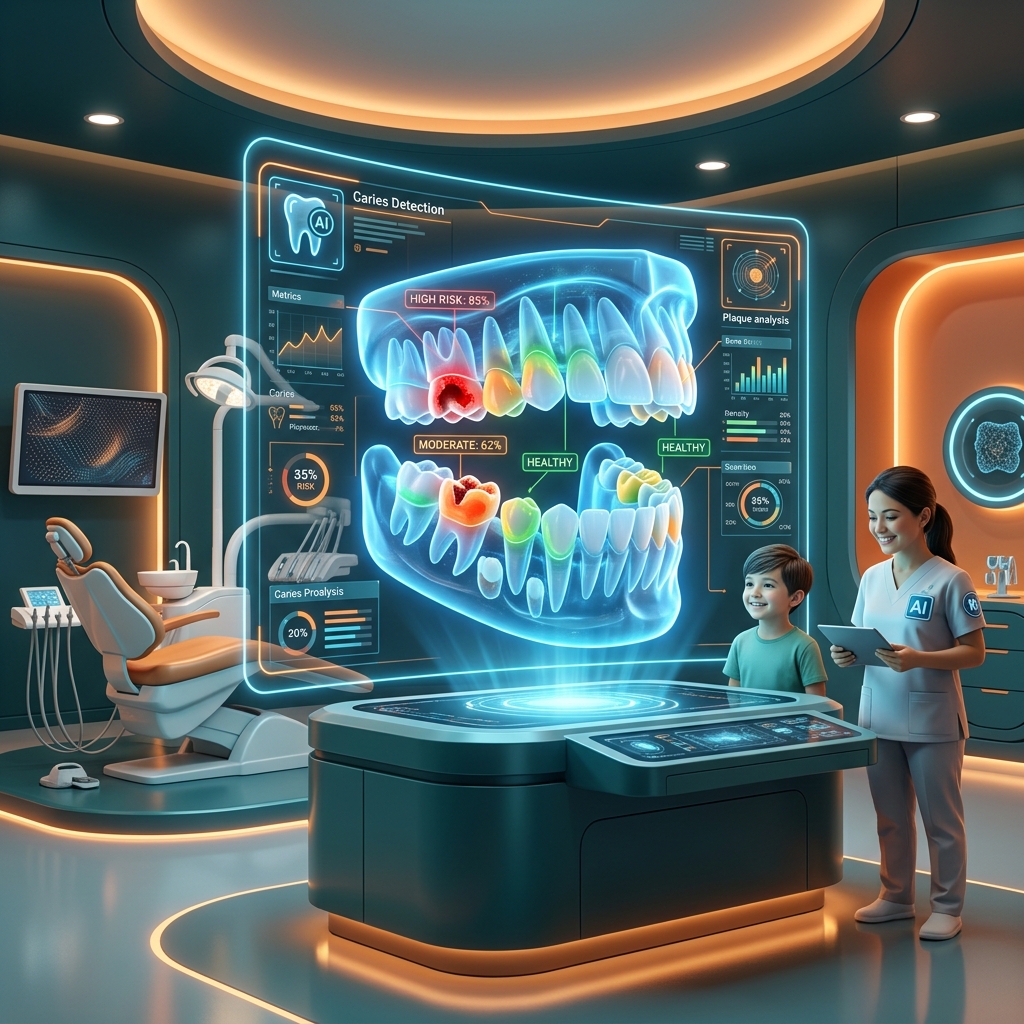
A comprehensive 2026 systematic review and meta-analysis published in the journal Children evaluated how artificial intelligence—specifically deep learning convolutional neural networks (CNNs)—is transforming pediatric dental practice by analyzing radiographic, intraoral photographic, and clinical imaging data.
2. 97% Specificity: Minimizing False Alarms for Kids
The meta-analysis compiled data across primary and mixed dentition studies, revealing two breakthrough diagnostic benchmarks:
- 91% Pooled Sensitivity: AI models reliably identify early radiographic and photographic enamel demineralization.
- 97% Pooled Specificity: Near-zero false alarms. The algorithm accurately identifies healthy sound tooth structure without incorrectly flagging normal developmental grooves as cavities.
Achieving 97% specificity is a major clinical win: it prevents unnecessary over-treatment in young children, preserving healthy primary teeth whenever possible.
3. What This Means For You
Early identification of demineralization on intraoral images allows pediatric dentists to assess caries risk and recommend timely preventive care before extensive decay develops.
Understanding primary tooth radiopacity vs. permanent enamel is a core skill. AI serves as a real-time calibration tool when reviewing pediatric bite-wings and panoramic radiographs.
AI integrates risk prediction algorithms for Early Childhood Caries (ECC) based on diet, saliva, and radiographic history, giving parents clear visual guidance for preventive care.
Children (MDPI), 2026. "Artificial Intelligence in Pediatric Dentistry: A Systematic Review and Meta-Analysis."